Empire Takeover
- 4.6
- Rating
- 5.00M
- Installs
- Free
- Price

 Analysis by App-foxy
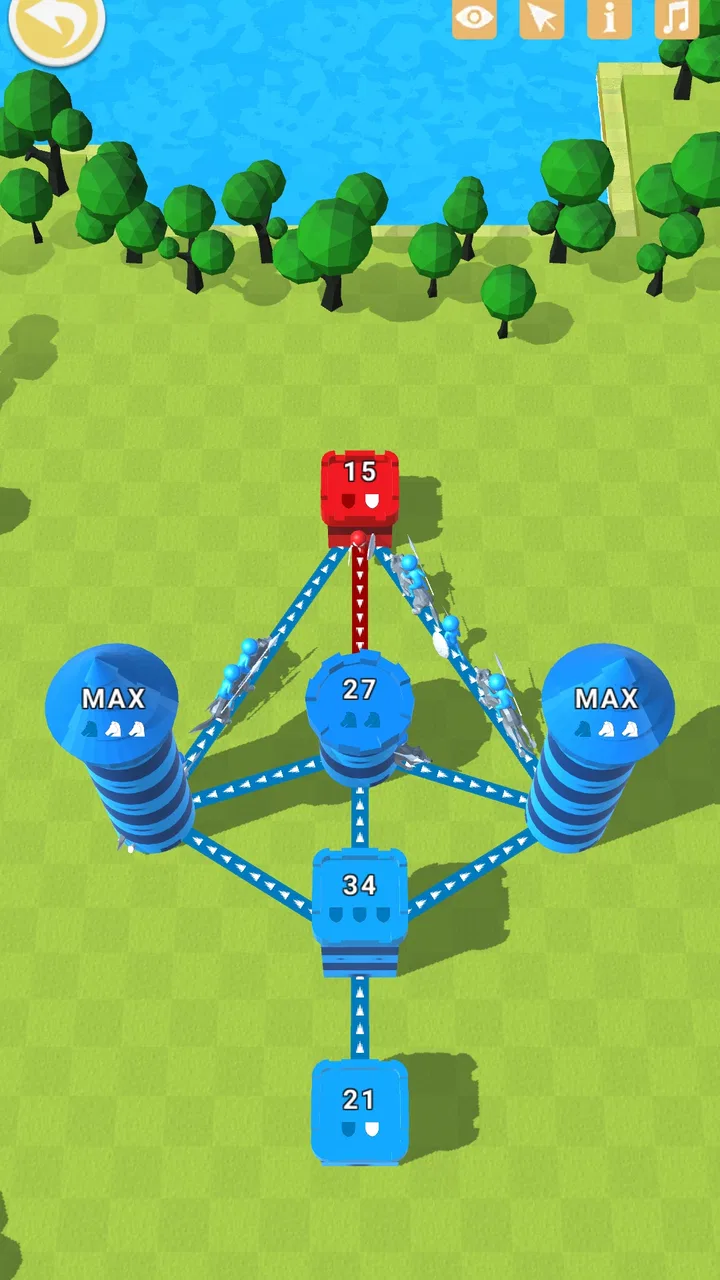
I went into Empire Takeover expecting a quick strategy game built around attacking at the right moment, and that is exactly where its appeal lies. It is easy to understand in a few minutes: you look at the battlefield, decide where pressure matters most, and try to rush through the enemy before your position collapses. The challenge is not learning a huge rulebook. It is making better decisions than the opponent with the information and opportunities in front of you.
That makes this a good fit for players who enjoy compact tactical sessions rather than long, complicated empire simulators. I found myself thinking less about collecting a large number of resources and more about timing, direction, and whether a seemingly safe move would leave another part of the map exposed. The store summary describes the experience as rushing and crushing the enemy through intelligence, and in practice the important word is intelligence: careless speed is often less useful than a well-chosen attack.
Developed by HeroNow Games, this free strategy title has built a substantial audience, with more than five million installs and an average rating of 4.6 from roughly 235 thousand ratings. Those figures do not replace personal experience, but they do suggest that its short-form approach has found plenty of players. It is rated Teen, runs on Android seven point one and later, and includes optional purchases ranging from $0.99 to $99.99 per item.
You May Also Like

 Blood Strike: 2.5 Anniversary
Blood Strike’s Loadouts Turn Every Drop Into a Tactical Gamble
A close look at Blood Strike’s custom loadouts: how fast access to signature weapons reshapes its battle royale rhythm, rewards preparation, and narrows the gap between fights.

 Pandora - Music & Podcasts
Pandora’s Music Is Easy to Start, but Harder to Recover
Pandora’s strength is its low-effort path from a seed to a station. Its weak spot is how much confidence it asks you to place in connection, setup, and quiet recovery.

 8 Ball Pool
 Is Built on Rivalries, Rematches, and Routine
A close look at the rivalries, rematches, shared routines, and unanswered safety questions that turn a quick pool match into a persistent mobile community.

 Samsung Music
’s Quiet Strength Is Playing What You Already Own
Its reach comes less from spectacle than from dependable access to a personal library. That simplicity is both the app’s strongest retention engine and its ceiling.

 AccuWeather: Weather Radar
AccuWeather Review: A Quick, Clear Forecast for Everyday Decisions
For everyday plans, the best forecast is the one you can understand quickly. AccuWeather makes rain timing, radar, and local conditions easy to act on, with a few trade-offs.

 Hill Climb Racing
Why Hill Climb Racing Still Turns Crashes Into One More Run
A tiny car, a bumpy hill and one more upgrade: Hill Climb Racing keeps resurfacing because its simple chaos makes every near-miss feel personal.
More From Our News Desk



Where the real decisions happen
The first thing I noticed is that Empire Takeover does not need a complicated interface to create meaningful choices. The basic situation is usually readable quickly, but the consequences of acting too soon are not always obvious. An enemy position may look vulnerable, yet committing there can cost you the chance to control a more important route. Conversely, waiting for a perfect opening can give the opponent enough time to strengthen or advance.
I recommend treating every attack as a question rather than an automatic opportunity. Ask yourself what the move changes after it succeeds. Does it open a route toward the next target? Does it reduce the enemy’s ability to respond? Does it leave your own side with enough strength to handle a counterattack? This way of playing is more reliable than simply selecting the nearest weak point.
The strongest habit is to plan one move beyond the attack you are currently making. A rush that wins the immediate exchange may still be a poor decision if it creates an awkward position afterward. I often had better results when I paused briefly before committing, especially when several targets seemed available. That small pause turns the game from reflexive clicking into a compact planning exercise.
The map also encourages prioritization. You cannot treat every area as equally important, so you need to identify which position supports your wider plan and which one is merely tempting. A useful approach is to separate targets into three groups: positions that advance your route, positions that protect your current territory, and positions that can wait. This prevents the common mistake of spending effort on a low-value victory while a more dangerous threat develops elsewhere.
Why speed alone is not enough
The word “rush” can make the game sound like a test of fast hands, but I did not find blind speed to be a dependable strategy. Acting quickly is valuable when the opponent is genuinely exposed. It becomes wasteful when you are attacking simply because you have an available action. The difference between those situations is the heart of the game.
I found it useful to create a short mental checkpoint before each major move. I would look at the immediate gain, the likely response, and the next destination. If I could not explain what the move achieved beyond “it was available,” I usually waited. This is particularly helpful during a busy session when the interface encourages constant action.
That does not mean slow play always wins. A player who overthinks every small decision can miss the moment when pressure is most effective. The better balance is to prepare deliberately and execute quickly once the plan is clear. In other words, the game rewards fast execution after careful evaluation, not permanent hesitation.
Managing risk when the board opens up
Empire Takeover becomes more interesting when a successful push creates multiple possibilities. Winning one exchange can give you momentum, but it can also tempt you to spread too far. I learned to distinguish between expansion that improves my next decision and expansion that merely makes the board look busier.
A practical rule is to avoid opening more fronts than you can meaningfully monitor. If a move forces you to respond in several directions, its apparent reward may be smaller than it first appears. Concentrated pressure is easier to control, while scattered attacks can leave you reacting instead of planning. I preferred securing a useful line of progress before starting another contest.
There is also a psychological trap in taking a visible lead. Once I gained ground, I sometimes became too eager to finish the match and chose an aggressive move that gave away the advantage. The safer response was to convert the lead into better choices: protect the route that mattered, remove the opponent’s best reply, and only then push again. A lead is not the same as a win.
For new players, I suggest judging moves by their downside as well as their reward. If the attack fails or produces less than expected, can you still recover? A modest move with a manageable consequence is often better than a dramatic gamble that leaves no useful follow-up. This is one of the clearest ways to improve without needing to memorize anything.
Adapting instead of repeating a favorite opening
One weakness of any compact strategy game is the temptation to search for a single opening and repeat it. Empire Takeover is more enjoyable when you resist that habit. The same first move will not always be appropriate because the value of an attack depends on the surrounding situation, your available routes, and how the opponent responds.
I began by trying to establish a familiar pattern, but I quickly found that rigid repetition made my decisions predictable. A better method was to use the opening only as a starting question: where is the opponent least prepared, and which route gives me the most useful next choice? Sometimes that meant pressing forward; sometimes it meant securing a position before expanding.
When a plan stops working, do not automatically increase the intensity of the same plan. Change the objective. If direct pressure is being answered effectively, look for a way to improve your position before returning to the attack. If you have been playing too cautiously, identify the moment when waiting is costing more than it protects. Adaptation is not random switching; it is recognizing which assumption has become false.
This makes the game suitable for players who enjoy learning from losses. A defeat can reveal that you attacked too early, valued the wrong target, or failed to account for the opponent’s next option. If you only want a game where the same sequence produces the same result, this may feel less satisfying. The fun comes from adjusting your choices rather than following a fixed script.
How to use short sessions well
I found Empire Takeover particularly convenient when I had a few spare minutes and wanted something more engaging than a passive time filler. A single session can be approached as a focused exercise: choose a priority, test a plan, and review the turning point afterward. That makes it easy to play during a break without requiring the commitment of a large-scale strategy campaign.
A realistic everyday scenario would be playing during a short commute or while waiting for an appointment. I would start with a simple goal, such as avoiding unnecessary attacks or paying closer attention to counterplay. Instead of measuring success only by the result, I could finish the session knowing whether I had made more disciplined decisions. This gives short play periods a useful sense of progress.
For longer sessions, I recommend changing the question you are practicing. One round can focus on efficient expansion, another on holding a lead, and another on recovering after a poor opening. This keeps the experience from becoming a repetitive race and helps expose weaknesses in your decision-making. It also gives the game more depth than the quick visual action initially suggests.
The free entry point is helpful for trying this style without committing money immediately. At the same time, the presence of optional purchases means players should decide in advance how they want to approach spending. I would treat purchases as a personal boundary rather than part of the strategy itself: enjoy the free experience first, then decide whether anything extra genuinely improves your play instead of buying impulsively after a frustrating loss.
What changes as you keep playing
The early appeal is accessibility, but the longer-term value comes from noticing patterns in your own decisions. At first, I concentrated on winning the next exchange. With more time, I paid greater attention to the shape of the position that followed. That shift made the game feel less like a sequence of isolated attacks and more like a chain of connected commitments.
There is a meaningful difference between knowing what you want to do and knowing when to do it. A strong route can fail if you begin before the conditions are favorable. A weaker-looking route can succeed when it limits the opponent’s responses. This creates a planning horizon that extends beyond the current action without turning the game into an exhausting spreadsheet exercise.
I also appreciated that improvement is not limited to learning more aggressive tactics. Defensive discipline matters because it protects the value of earlier decisions. If you spend all your attention on expansion, you may overlook the cost of maintaining what you already control. If you focus only on safety, you can allow the opponent to dictate the pace. The most reliable style alternates between creating pressure and preserving options.
That said, players looking for a deep, traditional strategy simulation should set their expectations carefully. This is not the kind of game I would choose when I want diplomacy, extensive economic management, or a long campaign built around many interacting systems. Its depth comes from compact tactical choices, not from a giant collection of menus and statistics. A larger strategy title will be a better match if you want to spend an evening managing a detailed civilization or planning across a very long timeline.
Who will enjoy it, and who may skip it
I would recommend Empire Takeover to someone who likes strategy games that are quick to understand but difficult to play consistently well. It suits players who enjoy evaluating opportunities, changing plans, and learning why an apparently good move failed. It is also a reasonable choice for people who want a free game that can fit around a busy day rather than demand a long uninterrupted session.
It may be less suitable for players who prefer relaxed, low-pressure experiences. The emphasis on timing and counterplay means that a careless decision can change the direction of a session quickly. It may also disappoint anyone expecting a large empire-building game with extensive customization. The compact format is its identity, not a missing extra layer that every player should expect to appear later.
Teen-rated content is another reason parents and younger players should consider whether the tone is appropriate for them. I would also advise anyone sensitive to optional spending to keep purchases in mind before starting, since individual items can reach $99.99. The game is free to download, but free access and unlimited spending are not the same thing, so a clear personal limit is sensible.
Compared with a traditional turn-based strategy game, this is more immediate and less burdened by preparation. Compared with a fast arcade title, it asks for more thought and gives each action greater strategic weight. That middle ground is where it works best. It is not trying to replace a full strategy simulator or a pure action game; it offers a smaller battlefield where timing and prioritization carry most of the experience.
My strategy verdict
After spending time with it, I see Empire Takeover as a focused strategy game built around meaningful pressure. Its best moments come when I recognize that the obvious target is not necessarily the correct one, wait long enough to improve the situation, and then act before the opportunity disappears. That rhythm gives the short sessions a satisfying sense of purpose.
The main limitation is also clear: players who need extensive systems, a broad narrative, or a calm pace may find the format too narrow. Optional purchases are worth approaching thoughtfully, and repeated use of one opening can make the experience feel flatter than it needs to be. The game rewards active decision-making, so it loses much of its appeal if played on autopilot.
For me, the recommendation is straightforward. If you want a free Android strategy game where a small number of choices can reshape the whole match, this is worth trying. Start by watching the consequences of your attacks, keep your next move in mind, and treat every advantage as something to manage rather than celebrate too early. Its real strength is turning simple actions into decisions with a visible cost.
The developer, HeroNow Games, has chosen a direct and approachable format rather than an oversized strategy package. That makes it easy to pick up, but the better experience comes from playing with intention. I would recommend it to a friend who enjoys quick tactical challenges and does not need a complex empire simulator. For that audience, Empire Takeover offers enough planning, risk, and adaptation to make repeated sessions feel worthwhile.
FAQs for Empire Takeover
01What is Empire Takeover?
Empire Takeover is a mobile strategy game in which you expand a growing kingdom, manage resources, develop your territory, and compete against opposing forces. Gameplay generally combines base development, troop upgrades, tactical battles, and map progression. Before downloading, players should expect a long-term experience focused on gradual improvement rather than a quick, one-session game.
02How do you play Empire Takeover?
The main objective is to strengthen your empire and overcome rival territories. You typically collect resources, upgrade buildings, unlock or improve units, and choose when to attack or defend. Success depends on planning your formations and spending resources carefully. New players should follow the introductory missions first, since they explain the core systems and provide useful early rewards.
03Is Empire Takeover free to download and play?
Empire Takeover can generally be downloaded and played without an upfront purchase, but it may include optional in-app purchases. These purchases can provide resources, speed up upgrades, or offer special bundles. It is possible to progress without paying, although free players may need more patience. Parents should also review purchase settings before allowing children to play.
04Does Empire Takeover require an internet connection?
Because Empire Takeover is built around account progression, battles, events, and other connected features, an internet connection may be required for much of the experience. Offline access can be limited or unavailable, and unstable connectivity may interrupt loading or multiplayer-related activities. A reliable Wi-Fi or mobile data connection is recommended, especially when saving progress or participating in live events.
05Is Empire Takeover suitable for all players?
Empire Takeover is best suited to players who enjoy strategy, kingdom development, competitive progression, and managing several upgrade systems at once. It may feel demanding for users who prefer simple casual games, since progress can involve waiting, repeated missions, and careful resource management. Check the store’s age rating and privacy information before downloading, particularly for younger players.
Pros
- Simple controls make the game easy to learn for new players.
- Short battles fit well into quick gaming sessions.
- Multiple factions add variety to the campaign experience.
- Strategic unit placement can make a real difference in combat.
- Regular objectives give players clear reasons to keep progressing.
Cons
- Progress can feel slow without frequent upgrades or extended play.
- Some battles rely heavily on troop strength rather than strategy.
- The interface may feel crowded on smaller phone screens.
- Repeated missions can become predictable after extended play.
- Online-focused features may limit enjoyment when the connection is poor.

Empire Takeover
Gallery